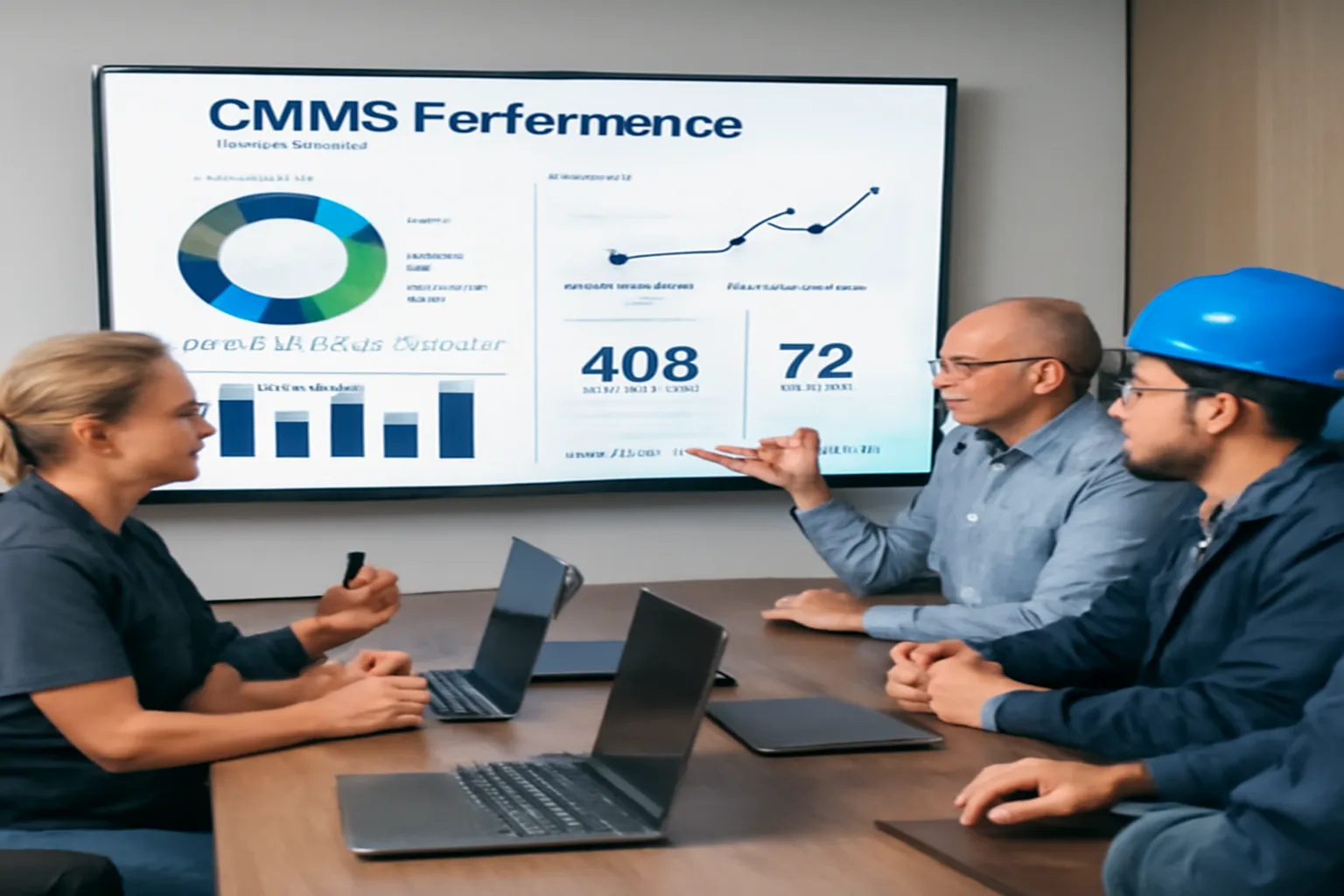
Enterprise CMMS implementations are more likely to fail from process and data problems than from technology failures. IBM Maximo is a mature, proven platform — organizations that struggle with it are almost always struggling with the surrounding management disciplines: asset data quality, work management process consistency, PM program hygiene, and the cultural change required to shift from paper-based and spreadsheet-based maintenance management to a disciplined CMMS-driven operation. This guide provides the best practice framework for building a high-performing maintenance management program on IBM Maximo.
The CMMS Maturity Model
The CMMS maturity model describes five levels of organizational competence in using a computerized maintenance management system. Understanding where your organization sits on this model — and what is required to advance — is the foundation of any improvement program.
Level 1 — Basic Work Tracking: the CMMS is used primarily to log work that has already been completed. Work orders are created after the fact, actuals are recorded inconsistently, and PM schedules either do not exist or are not executed through the CMMS. Asset records are incomplete or inaccurate. Reports are rarely used. The CMMS functions as an expensive logbook. Most organizations acquire a CMMS at this level of use.
Level 2 — Planned Work Management: the organization creates work orders in advance, plans labor and materials before work begins, executes PMs through the CMMS, and tracks actual costs versus planned estimates. Asset hierarchy and item master are maintained with reasonable accuracy. Basic KPIs (PM compliance, backlog) are reviewed regularly. Most Maximo 7.6 users without active reliability or analytics programs operate at this level.
Level 3 — Reliability Optimization: failure codes are consistently recorded and analyzed to identify systemic equipment problems. PM frequencies are driven by failure history rather than manufacturer recommendations alone. Failure analysis data from work orders feeds proactive PM program improvements. Planned and preventive work exceeds 70% of total work volume. Scheduling efficiency is measured and improved.
Level 4 — Condition-Based Maintenance: condition monitoring data (vibration, oil analysis, thermography) supplements PM schedules. Maintenance actions are triggered by condition indicators in addition to calendar or meter schedules. The organization is integrating IoT sensor data and evaluating predictive analytics capabilities.
Level 5 — Predictive and Prescriptive: AI models predict failures before they occur and automatically generate maintenance work orders. Maintenance decisions are optimized against total cost of ownership, production schedule, and spare parts availability simultaneously. The organization’s maintenance cost per unit of production is continuously declining as the AI models improve with accumulating data.
Advancing between levels requires specific organizational investments at each transition. Moving from Level 1 to Level 2 requires process discipline — not technology. Moving from Level 2 to Level 3 requires data quality investment and reliability engineering capability. Moving from Level 3 to Level 4 requires sensor infrastructure and monitoring platforms. Each transition builds on the capabilities established in the previous level.
Data Quality: The Make-or-Break Foundation
Every experienced Maximo consultant has the same story: they arrive at a struggling implementation and find that the CMMS is technically functional but the underlying data is a disaster. Duplicate asset records. Item master entries where the description is “PART” or “MISC.” Work orders with no failure codes, no actual labor, and no asset linked. PM records that generate work orders for equipment that was decommissioned two years ago.
Data quality is not a technical problem — it is a governance and discipline problem. The following data quality foundations are non-negotiable for a functional Maximo implementation:
Asset hierarchy accuracy: every maintainable asset in the facility must have a corresponding record in Maximo, with accurate parent-child relationships, location assignments, manufacturer and model information, and current operational status. Conducting a physical asset inventory — walking the facility and comparing what is physically present against Maximo records — is the most reliable way to establish this accuracy. This inventory should be completed before go-live and maintained through a formal asset onboarding process for new equipment.
Item master cleanliness: each unique spare part should have exactly one item master record. Duplicates — the same bearing appearing as five different item master records with five different descriptions — fragment inventory, distort reorder calculations, and make finding parts nearly impossible for storeroom staff. Deduplication of the item master is painful but essential, and should be done before activating the inventory module.
Failure code completeness: failure codes must be completed on every corrective work order to provide meaningful failure analysis data. This requires making failure code fields mandatory in Maximo (conditional required fields on the Work Order Tracking application) and including failure code accuracy in technician performance evaluations.
Work order actuals: actual labor hours, actual materials, and completion dates must be recorded consistently for every work order. Without actuals, Maximo’s cost reports are meaningless, job plan accuracy cannot be measured, and asset lifecycle cost calculations are wrong. Organizations that fail to establish actuals discipline within the first 90 days of go-live rarely recover it — the habit either forms early or does not form at all.
PM Program Optimization
The preventive maintenance program is the most critical lever for shifting an organization from reactive to planned maintenance. An overgrown, poorly designed PM library is as damaging as having no PMs at all — it overwhelms technicians with unnecessary tasks, consumes resources on equipment that does not need attention, and crowds out time for truly value-adding work.
PM program right-sizing: most organizations inherit PM programs that are too large. Equipment manufacturer recommendations are conservative by design — they assume worst-case operating conditions and zero failure cost tolerance. In practice, many PMs can be extended or eliminated without increasing failure risk. Failure history from Maximo work orders is the primary data source for PM frequency optimization: if failures are not occurring between PM intervals, the interval can be extended.
PM content quality: each PM task must specify exactly what the technician should inspect, measure, lubricate, adjust, or replace. Vague PM tasks (“check pump” or “inspect motor”) produce inconsistent results because technicians interpret them differently. Effective PM tasks include acceptance criteria: “measure vibration at bearing housing — acceptable range 0-4 mm/s RMS; escalate if >6 mm/s RMS.”
PM compliance measurement: 80% monthly PM compliance is the industry minimum for a functional PM program. Measuring compliance at the craft level — tracked through Maximo reporting dashboards — reveals which trades or areas have execution problems. Investigating why PMs are not completed — parts not available, access restrictions, insufficient staffing — identifies the specific barriers to compliance that need to be addressed.
Meter-based PMs: for high-utilization equipment, calendar-based PMs disconnect maintenance intervals from actual equipment wear. A pump running 8,000 hours per year wears twice as fast as one running 4,000 hours. Meter-based PMs — triggered by operating hours, cycle counts, distance traveled, or units processed — align maintenance frequency with actual wear rate. Establishing reliable meter reading disciplines is a prerequisite for effective meter-based PMs.
Seasonal PM adjustment: production processes, weather conditions, and operational demands vary seasonally. PM libraries should reflect this variation — cooling tower inspections before summer startup, heating system checks before winter, harvesting equipment PMs before the season begins. Maximo’s PM Seasonal Dates feature supports this scheduling without manual manipulation of PM frequencies.
KPI Framework: Linking Maintenance to Business Outcomes
Maintenance KPIs must connect maintenance activities to business outcomes that operations leadership cares about: production availability, cost of goods sold, asset capital efficiency, and safety performance. KPIs that only matter to the maintenance department — tracked only by the maintenance manager — do not drive sustained improvement.
Availability-focused KPIs:
Equipment Availability: the percentage of time critical equipment is available to run, calculated as scheduled uptime minus maintenance downtime divided by scheduled uptime. This KPI is jointly owned by maintenance (who controls MTTR) and operations (who controls startup and shutdown procedures). It is the primary metric for evaluating the business impact of maintenance performance.
Mean Time Between Failures (MTBF): the average operating time between corrective failures on a specific asset or asset class. An improving MTBF trend confirms that PM improvements or reliability initiatives are having measurable impact on equipment reliability.
Cost-focused KPIs:
Maintenance Cost as Percentage of Replacement Asset Value (RAV): total annual maintenance cost (labor + materials + contractors) divided by the total replacement value of the maintained asset base. World-class benchmarks are 1-3% for modern, well-maintained equipment. Organizations above 5% are typically experiencing high reactive maintenance costs and should examine failure frequency and PM compliance.
Cost per Work Order by Work Type: comparing actual costs against job plan estimates by work type (corrective, preventive, inspection) identifies where cost variances are most significant and guides job plan improvement efforts.
Efficiency-focused KPIs:
Planned Work Ratio: the percentage of total work order hours that are planned (with a job plan and advance material confirmation) versus unplanned (immediate response without prior preparation). World-class targets are 85%+ planned work. Organizations below 50% are in reactive mode, consuming resources on emergency response rather than planned execution.
Schedule Compliance: the percentage of scheduled work orders actually completed on the scheduled date. Consistently low schedule compliance indicates planning problems (work scheduled without confirmed parts or access), supervisor coordination failures, or chronic understaffing.
These KPIs connect directly to Maximo data: work order reports provide the raw data for calculation, and Maximo’s KPI application can display current values with threshold indicators on the maintenance team’s Start Center.
Change Management for CMMS Implementations
The technology is never the hard part of a CMMS implementation. Maintenance teams that have worked with paper-based and whiteboard-based systems for years do not change their habits because a new software system is installed. Change management — the systematic approach to helping people adopt new ways of working — is what separates successful implementations from expensive shelfware.
Stakeholder analysis: identify who gains from the CMMS (planners who get better job plans, managers who get real-time visibility) and who perceives threats (technicians who feel monitored, supervisors who fear performance accountability). Design the change communication to address both the gains and the concerns.
Executive sponsorship: the most reliable predictor of CMMS implementation success is sustained executive commitment. When senior operations and maintenance leadership visibly use Maximo data in their decision-making — asking about PM compliance in staff meetings, reviewing work order backlog in monthly operations reviews — they signal that the CMMS matters. When executives ignore the system, frontline staff quickly follow.
Phased rollout: implementing Maximo in phases — starting with one plant site or one department — limits the blast radius of initial problems and creates an internal success story to reference when expanding to additional sites. Phased rollout also allows the implementation team to learn from the pilot before scaling.
Superuser network: identifying and training a group of maintenance staff as Maximo superusers — colleagues who become the first line of support for other users and advocates for the system within their peer group — dramatically accelerates adoption. Superusers feel recognized and empowered; other staff have a trusted colleague to ask questions rather than formal training.
User Adoption Strategies
User adoption failure is the most common cause of CMMS value realization failure. Organizations spend hundreds of thousands of dollars implementing Maximo and then find that technicians continue writing work on paper, planners maintain parallel spreadsheet systems, and the CMMS data is too incomplete to be trusted.
Training that matches actual roles: generic “how to use Maximo” training does not drive adoption. Training must be role-specific and scenario-based: “here is how a planner creates a work package for a pump changeout,” “here is how a technician records actuals on a completed job,” “here is how a supervisor reviews the weekly backlog.” Users need to practice the specific workflows they will use daily, not explore the entire application.
Simplify the initial scope: the most common adoption failure pattern is deploying too many features simultaneously. Start with the minimum viable workflow — create work order, assign to technician, close with actuals. Add complexity (job plans, workflow routing, detailed failure codes) after users are comfortable with the basics. Each addition should solve a clear pain point that users themselves have identified, which is why Maximo workflow automation is typically the second major capability organizations activate after core work order management.
Make Maximo the only path: adoption suffers when parallel systems exist. If work can still be assigned through a whiteboard or a text message and then entered into Maximo retrospectively, many users will continue using the familiar parallel process and enter Maximo data as an afterthought, ensuring poor data quality. Removing parallel systems — committing to Maximo as the single source of work management truth — is uncomfortable but essential for data quality and adoption.
Celebrate early wins: identify specific improvements that Maximo enables in the first 90 days and communicate them clearly to the team. “Maximo helped us prevent this equipment failure by alerting us to the pattern in our data” or “Our parts availability for planned jobs improved from 65% to 85% because we’re using Maximo’s material planning tools” — these stories build credibility and momentum for broader adoption.
IBM Maximo’s position as the leading enterprise CMMS is maintained not because it is the simplest system to use but because it provides the depth of capability that large, complex maintenance organizations need. Organizations that invest in the data quality, process discipline, and change management required to use Maximo well consistently outperform those that rely on the technology alone to deliver results. The Industrie du Futur framework provides useful benchmarks for how leading manufacturers are evolving their maintenance management maturity.