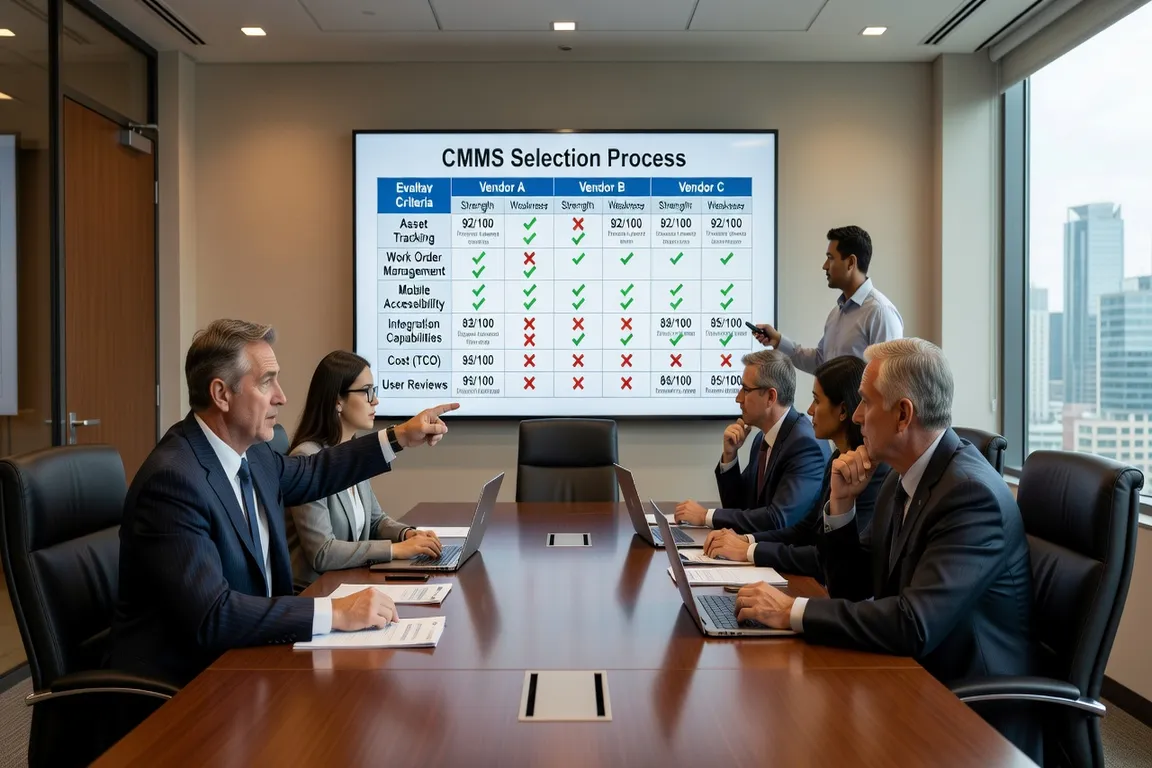
Selecting a CMMS (Computerized Maintenance Management System) or EAM (Enterprise Asset Management) platform is a multi-year commitment. The wrong choice costs organizations millions in wasted implementation investment, poor user adoption, and inadequate functionality. The right choice becomes the operational backbone of maintenance for a decade or more.
This comparison evaluates four of the most widely deployed enterprise maintenance platforms: IBM Maximo (with MAS), SAP Plant Maintenance (PM), Oracle EAM (formerly Oracle Enterprise Asset Management), and Fiix by Rockwell Automation.
For context on IBM Maximo’s core capabilities, see What Is IBM Maximo? before diving into this comparison.
Platform Overview
IBM Maximo / Maximo Application Suite
Positioning: Enterprise-grade EAM for asset-intensive industries. The market leader for complex, multi-site maintenance operations in utilities, oil & gas, manufacturing, transportation, and facilities management.
Core strengths: Deep asset management functionality, mature PM scheduling, sophisticated workflow, strong MRO inventory management, and (in MAS) AI-powered predictive maintenance through MAS Monitor and MAS Predict.
Target organization: Large enterprises (1,000+ employees) with complex asset portfolios, multiple sites, and significant regulatory compliance requirements.
Deployment options: MAS SaaS (IBM-hosted), customer-managed OpenShift, or Maximo 7.6 on-premise.
SAP Plant Maintenance (PM)
Positioning: Maintenance management module integrated within SAP ERP (ECC or S/4HANA). Best suited for organizations already running SAP for finance, procurement, and HR.
Core strengths: Native integration with SAP FI/CO (financial posting without interfaces), PM-to-MM (materials management) native workflow, ERP-native reporting.
Target organization: Organizations running SAP ERP as their core business system. The integration advantage is significant when SAP is already in place; less compelling for non-SAP shops.
Deployment options: SAP S/4HANA Cloud (SaaS), S/4HANA on-premise, or legacy SAP ECC.
Oracle EAM (Enterprise Asset Management)
Positioning: Asset management functionality within Oracle Fusion Cloud or Oracle E-Business Suite (EBS). Similar positioning to SAP PM — strongest for organizations already on Oracle ERP.
Core strengths: Integration with Oracle Procurement, Oracle Financials, and Oracle HR. Good asset lifecycle management, capital project integration, and GIS capabilities.
Target organization: Large enterprises on Oracle Fusion Cloud or E-Business Suite.
Deployment options: Oracle Fusion Cloud (SaaS), Oracle EBS on-premise.
Fiix by Rockwell Automation
Positioning: Cloud-native CMMS focused on ease of use, rapid implementation, and mid-market fit. Acquired by Rockwell Automation in 2021.
Core strengths: Intuitive UI, rapid implementation (weeks not months), strong mobile app, good AI-powered maintenance scheduling, reasonable cost for mid-market.
Target organization: Mid-market manufacturers, facilities management companies, food & beverage, education, healthcare — organizations that need solid CMMS without ERP-scale complexity.
Deployment options: SaaS (cloud-only).
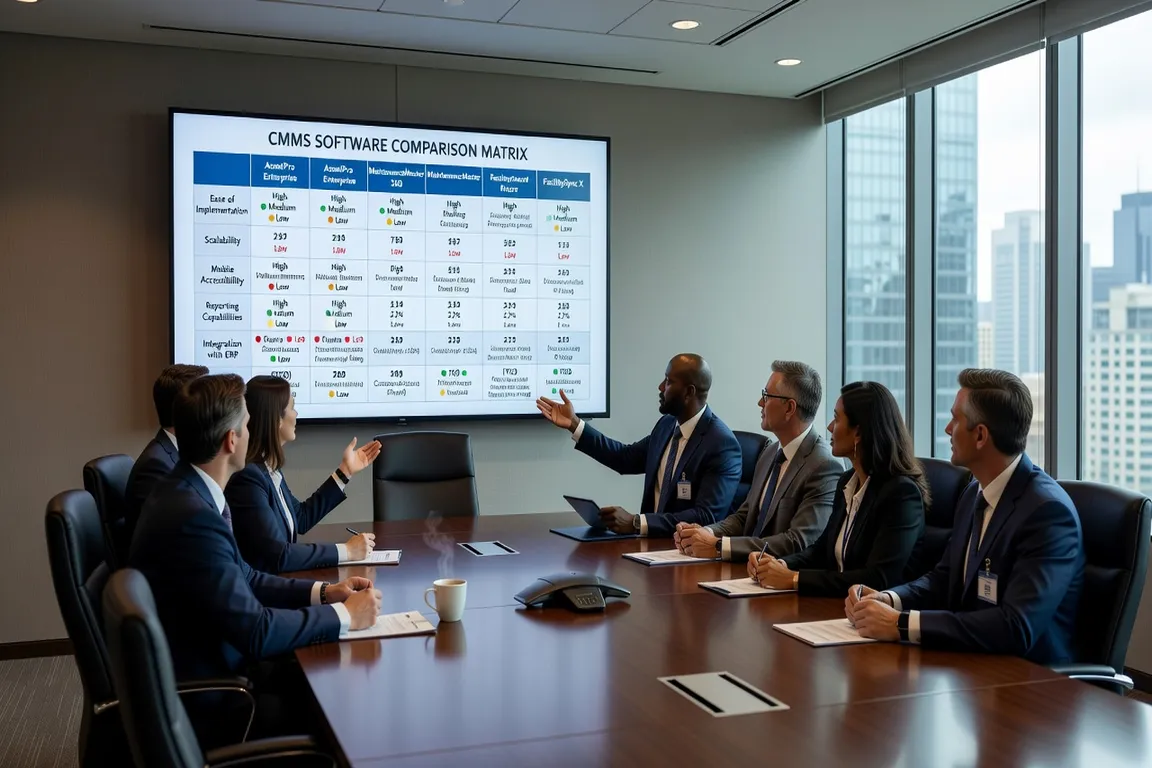
Feature Comparison
Work Order Management
| Capability | IBM Maximo | SAP PM | Oracle EAM | Fiix |
|---|---|---|---|---|
| Work order creation and tracking | Excellent | Good | Good | Good |
| Multi-level task / subtask | Yes | Yes | Yes | Limited |
| Job plans / standard jobs | Excellent | Good | Good | Basic |
| Workflow approval routing | Excellent | Good | Good | Basic |
| Mobile work order completion | Excellent (MAS Mobile) | Good (SAP Asset Manager) | Good | Excellent |
| Work order actuals capture | Excellent | Excellent | Good | Good |
Asset Management
| Capability | IBM Maximo | SAP PM | Oracle EAM | Fiix |
|---|---|---|---|---|
| Asset hierarchy depth | Excellent | Good | Good | Moderate |
| Classification and attributes | Excellent | Good | Good | Basic |
| Failure code taxonomy | Excellent | Good | Moderate | Basic |
| Asset cost history | Excellent | Excellent (via FI/CO) | Good | Good |
| GIS integration | Good (IBM Spatial) | Limited | Good | Limited |
| Asset health scoring | Excellent (MAS Health) | Limited | Limited | Limited |
Preventive Maintenance
| Capability | IBM Maximo | SAP PM | Oracle EAM | Fiix |
|---|---|---|---|---|
| Time-based PM scheduling | Excellent | Excellent | Good | Excellent |
| Meter-based PM scheduling | Excellent | Good | Good | Good |
| Condition-based PM triggers | Excellent (MAS Monitor) | Limited | Limited | Limited |
| PM calendar management | Excellent | Good | Good | Good |
Inventory and MRO
| Capability | IBM Maximo | SAP PM | Oracle EAM | Fiix |
|---|---|---|---|---|
| Storeroom management | Excellent | Excellent (via MM) | Good | Basic |
| Reorder point automation | Excellent | Excellent (via MM) | Good | Good |
| Vendor catalog integration | Good | Excellent | Good | Good |
| Physical inventory | Good | Excellent | Good | Moderate |
Integration Capabilities
This is where vendor positioning diverges most sharply.
IBM Maximo: Requires explicit integration to connect with ERP systems (SAP, Oracle, etc.). The investment in MIF configuration or MAS REST API integration is real but well-supported. Once built, Maximo integrations are highly configurable and support complex data transformation. See the Maximo Integration Framework guide for architecture details.
SAP PM: No integration needed for SAP-to-SAP data flows. FI/CO posting, MM procurement, HR labor records, and PM equipment data are all native. For organizations on SAP, this is the single most compelling argument for SAP PM.
Oracle EAM: Similar advantage to SAP PM for Oracle-stack organizations. Oracle Procurement, Oracle Financials, and Oracle HR are natively connected within Oracle Fusion Cloud.
Fiix: Pre-built connectors for common ERP systems via the Fiix Open CMMS API. Integrations exist for SAP, Oracle, Microsoft Dynamics, and others. Less comprehensive than purpose-built integrations but adequate for many mid-market scenarios.
The enterprise software market trends that increasingly favor cloud-native integration approaches are tracked by publications like i-actu.fr, whose coverage of enterprise digital transformation provides useful context for integration decision-making.
Pricing Model Comparison
| Platform | Pricing Model | Indicative Range |
|---|---|---|
| IBM Maximo (MAS) | AppPoints subscription (per user/month) | $150-400/user/month (varies by application mix) |
| SAP PM | Included in S/4HANA license; additional S/4HANA fees | $100-300/user/month (S/4HANA total) |
| Oracle EAM | Included in Oracle Fusion Cloud; additional module fees | $120-280/user/month (Oracle Cloud total) |
| Fiix | SaaS subscription tiers | $45-90/user/month |
Note: These are directional ranges for planning purposes. Actual pricing depends heavily on user count, application scope, and negotiated enterprise agreements.
Maximo’s cost premium reflects its functional depth, especially for asset-intensive industries. Organizations that use the full MAS suite (Manage + Monitor + Health + Predict) will find the ROI case stronger than organizations using only basic CMMS functionality.
Fiix’s pricing advantage is significant for mid-market organizations — at a fraction of the cost per user, organizations without complex enterprise integration needs can deploy a capable CMMS quickly and affordably.
Implementation Complexity
| Platform | Typical Timeline | Key Complexity Drivers |
|---|---|---|
| IBM Maximo | 12-24 months (standard); 24-36 months (complex) | Customization depth, ERP integration, data migration |
| SAP PM | 6-18 months (SAP-native) | S/4HANA migration complexity if greenfield |
| Oracle EAM | 6-18 months (Oracle-native) | Oracle Fusion Cloud configuration depth |
| Fiix | 1-4 months | Minimal — cloud-native, low customization |
Fiix’s implementation speed is its clearest differentiator for mid-market. A Fiix implementation can be live within weeks, compared to the 12-24 month timelines typical for Maximo or SAP PM.
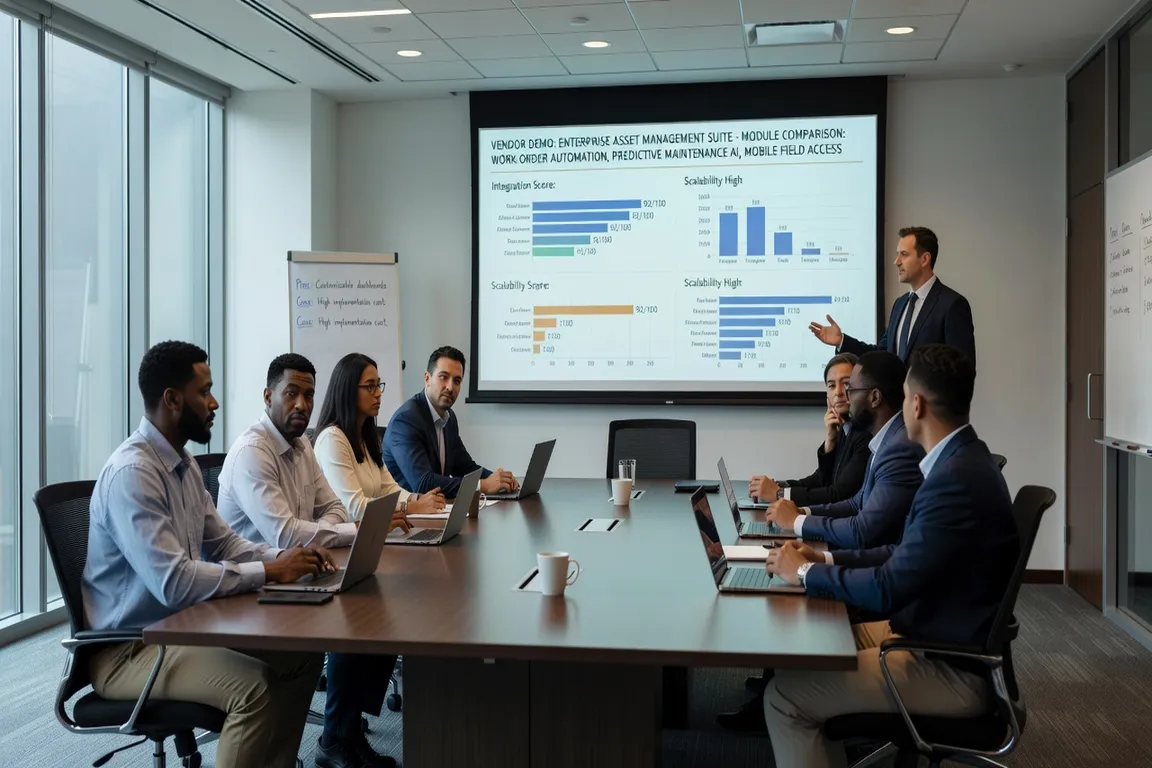
Decision Framework
Use this framework to identify the right platform for your organization:
Choose IBM Maximo / MAS if:
- You operate in utilities, oil & gas, transportation, or complex manufacturing
- Asset management depth (failure codes, reliability analysis, condition monitoring) is a strategic priority
- You plan to use AI/IoT capabilities (MAS Monitor, MAS Predict) within 3-5 years
- Your ERP is not SAP or Oracle (reducing the integration-native advantage of those platforms)
- You have 500+ maintenance users and multi-site operations
Choose SAP PM if:
- SAP ECC or S/4HANA is your core ERP and you’re not willing to build cross-system interfaces
- Your maintenance operations are relatively standard and don’t require deep CMMS customization
- Your organization is driving toward a full SAP-native system landscape
- Financial posting integration is a critical requirement
Choose Oracle EAM if:
- Oracle Fusion Cloud or EBS is your core ERP
- You need strong capital project and asset lifecycle integration within Oracle
- Your organization is standardizing on Oracle Cloud
Choose Fiix if:
- You’re a mid-market organization (under 2,000 employees) with straightforward maintenance operations
- Implementation speed is a priority — you need to be live in under 4 months
- Your team isn’t large enough to support a Maximo or SAP implementation
- Your budget is constrained and you don’t need enterprise-scale depth
For organizations evaluating CMMS best practices alongside platform selection, understanding the process maturity requirements of each platform is as important as the feature comparison.
Summary
There is no single “best” CMMS. The right platform depends on your organization size, asset complexity, ERP landscape, budget, and strategic direction.
IBM Maximo remains the gold standard for asset-intensive enterprise operations. SAP PM and Oracle EAM are strongest for organizations running those ERP platforms. Fiix has established itself as the leading cloud-native option for mid-market organizations that need capability without complexity.
Before committing to any platform, conduct a structured evaluation with defined scoring criteria, vendor demonstrations using your own use cases, and reference conversations with peer organizations in your industry.