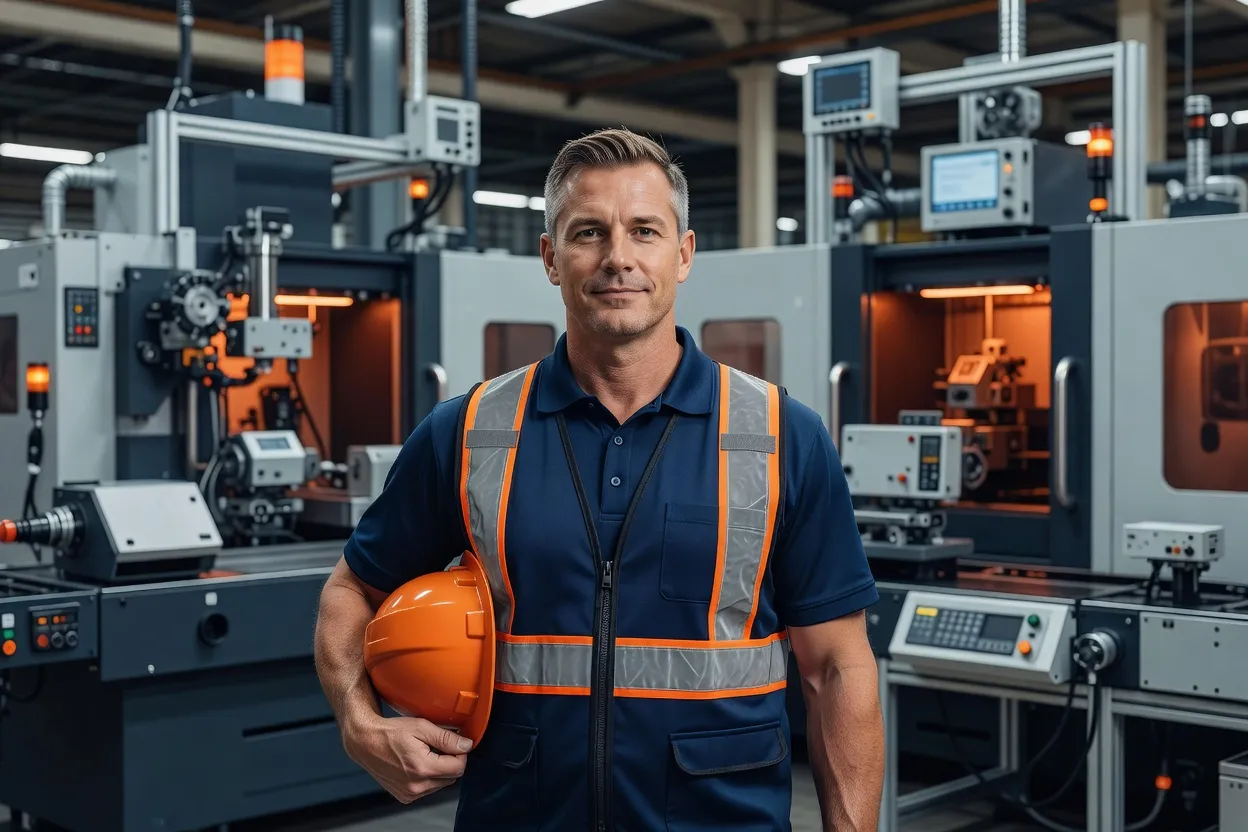
Marcus Chen is a veteran Plant Manager with 22 years of experience in industrial maintenance and manufacturing operations. He recently spearheaded a comprehensive 18-month transition to AI-driven predictive maintenance using the IBM Maximo Application Suite at a leading automotive parts facility, transforming a legacy “run-to-fail” culture into a data-driven powerhouse.
Meet the Plant Manager: 22 Years in Industrial Maintenance
Marcus, you’ve seen the industry evolve from paper-based work orders to cloud-based EAM systems. How has your perspective on “the perfect plant” changed over the last two decades?
When I started in the late 90s, the “perfect plant” was the one where the maintenance team was invisible because they were so fast at fixing things. If a conveyor went down, and my guys had it back up in ten minutes, I thought we were winning. We celebrated the “heroes” who could hear a bearing failing from fifty yards away. But as I moved into management, I realized that “hero culture” is actually a symptom of a failing system. You shouldn’t need heroes; you should need a predictable schedule. Back then, we were using Maximo 4.1 on old green-screen terminals, and the data was essentially a black hole. We put information in, but we never got anything out that could actually help us make a decision.
Over 22 years, I’ve realized that the perfect plant is actually quite boring. There are no midnight phone calls, no emergency air-freight for spare parts, and no “mystery” breakdowns that leave the floor supervisors scratching their heads. My perspective shifted from valuing the speed of repair to valuing the avoidance of repair. IBM Maximo has been the backbone of that journey. We moved from Maximo 6.2 on-premise, where we just logged what we broke after the fact, to the Maximo Application Suite (MAS) where we are now actually anticipating the break before it happens. It’s a total 180-degree turn in philosophy. In the old days, the “perfect” technician had a loud toolbox and greasy hands; today, the perfect technician has a tablet and a deep understanding of trend analysis.
Why Reactive Maintenance Was No Longer Sustainable
Every plant manager deals with some level of chaos. What was the specific “breaking point” for your facility that made you realize the old way of doing things was no longer an option?
It was a Tuesday in July, about three years ago. We had a catastrophic failure on our main rotary screw compressor — the “lungs” of our facility. It didn’t just stop; it tore itself apart. The internal journal bearings seized, which sent a shockwave through the drive coupling and burned out the motor windings. Because we were in a reactive mode, we hadn’t noticed the subtle increase in vibration or the slight temperature creep in the oil return line. That single failure shut down two production lines for four days. We lost nearly $300,000 in throughput, and I had to spend another $45,000 on emergency rentals and expedited shipping for a new unit from overseas.
When I sat down with the CFO to explain the variance in my budget, I realized I couldn’t keep blaming “bad luck.” Our OEE (Overall Equipment Effectiveness) was hovering around 68%, and our maintenance costs were rising even as our reliability was falling. We were caught in a “maintenance trap” — we were so busy fixing the things that broke yesterday that we had no time to prevent the things that were going to break tomorrow. I knew that if we didn’t leverage something like a predictive maintenance with Maximo and AI guide, we were going to be priced out of the market by more efficient competitors. We were spending more on “overtime” than we were on “planned time,” and that is a recipe for a burned-out workforce and a bankrupt facility.
The Decision to Pilot AI on Maximo
AI is a buzzword that gets thrown around a lot. What convinced you that Maximo’s AI tools — specifically Maximo Monitor and Predict — were more than just marketing hype?
I’m a skeptic by nature. I’ve seen plenty of “magic” software solutions come and go that promised to solve all our problems with the click of a button. What convinced me about Maximo was the integration. We were already using Maximo for our core EAM, so the data was already there — the work order history, the asset records, the failure codes, and the spare parts manifests. When I saw how Maximo Predict could take our existing historical data and combine it with real-time IoT sensor data, it clicked. It wasn’t just “AI” in a vacuum; it was AI built on top of our specific industrial reality.
Was there a specific feature or demonstration that tipped the scales?
It was the “Remaining Useful Life” (RUL) modeling. I saw a demo where the system didn’t just say “this pump might fail,” but rather “based on current vibration patterns and historical thermal cycles, this pump has a 75% probability of failure within the next 14 days.” That’s actionable. That’s something I can put into a production schedule during a planned weekend shutdown. I also spent time reading a deep-dive expert interview on AI in maintenance which helped me understand that AI isn’t replacing the technician; it’s giving the technician a superpower. It’s the difference between a doctor guessing what’s wrong based on a patient’s cough and a doctor looking at a high-resolution MRI. Maximo Predict gave us that MRI capability for our most critical assets.
Key Takeaway: AI in maintenance isn’t about replacing human intuition; it’s about scaling it. By leveraging historical work order data and real-time sensor feeds, Maximo provides a level of visibility that allows managers to move from “fixing” to “managing” asset health.
Choosing the First Assets for the Pilot
You can’t boil the ocean. How did you decide which assets would be the “guinea pigs” for this 18-month rollout?
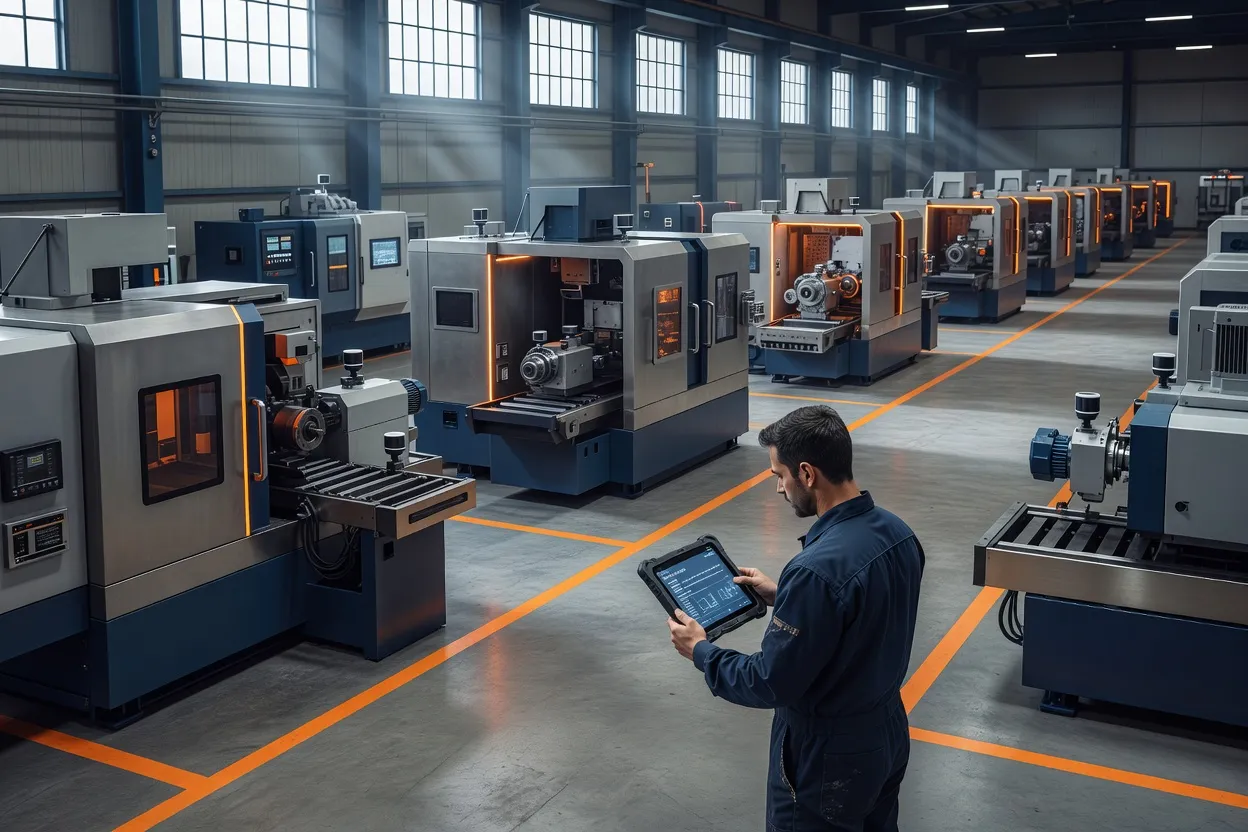
We used a rigorous criticality matrix. We didn’t just pick the most expensive machines; we looked at assets that had three specific characteristics: high cost of downtime, high frequency of “random” or “stochastic” failures, and existing sensor capability. We ended up choosing our paint shop conveyors and our high-pressure hydraulic presses. These are the heartbeats of our production flow.
The paint shop is the bottleneck of our entire plant. If the conveyor stops, the ovens have to be purged, and we lose thousands of dollars in ruined coatings and rework costs. It was the perfect high-stakes environment to test the AI. We also chose the hydraulic presses because they are notorious for seal failures that are hard to predict with traditional PMs (Preventative Maintenance). Traditional PMs say “change the seal every six months,” but sometimes a seal fails in three months, and sometimes it lasts for twelve. We wanted to see if the AI could catch the “pressure signatures” and flow-rate anomalies of a failing seal before it started leaking oil all over the floor and creating a safety hazard.
Getting the Data Right Before the Algorithms
We often hear “garbage in, garbage out.” How much work did you have to do on your underlying Maximo data before the AI could actually provide meaningful insights?
This was the hardest part of the entire 18-month journey. Honestly, it took us six months just to clean up our data. We realized that our technicians, out of habit or haste, were using “General Repair” as a failure code for about 80% of work orders. That’s useless for an AI. An algorithm can’t learn from “General Repair.” We had to go back and enforce strict adherence to our asset hierarchy and classification guide to ensure every asset was correctly categorized and every failure was properly documented with specific problem, cause, and remedy codes.
We also had to bridge the gap between OT (Operational Technology) and IT. Our machines were generating tons of data — pressure readings, cycle times, temperature gradients — but it was trapped in PLC (Programmable Logic Controller) siloes. We had to implement a strategy for how time-series databases power predictive analytics to ensure that the high-frequency vibration and temperature data could be ingested by Maximo in a way that the Predict models could actually use. We had to build a data pipeline that was as robust as our physical assembly lines.
Did you have to install a lot of new hardware?
Surprisingly, no. About 60% of the data we needed was already being captured by the machines’ internal sensors; it just wasn’t being sent anywhere useful. It was staying on the local HMI (Human Machine Interface) until it was overwritten. We did add some wireless vibration sensors to older motors and some ultrasonic leak detectors on our compressed air lines, but the real “gold” was in the existing SCADA data that we finally started piping into Maximo Monitor. The hardware wasn’t the hurdle; the connectivity and the data hygiene were the hurdles. Once the data was flowing, tightening up our storeroom and parts data — accurate bin locations, real consumption records, no more “General Repair” shortcuts — following the same discipline we now apply to inventory and storerooms is what actually let the predictive models earn their keep.
How Technicians Reacted to the First Alerts
Maintenance pros are notoriously protective of their craft. How did your “old school” technicians react when a computer started telling them how to do their jobs?
There was definitely pushback, and I expected it. One of my lead techs, a guy named Sal who has been here 30 years and can practically “smell” a bad bearing, literally laughed the first time an AI alert popped up on his tablet. The alert said a motor in the assembly area was showing signs of early bearing fatigue, even though it sounded perfectly fine to Sal’s seasoned ears. He thought the system was crying wolf.
We had to change our work order configuration guide to create a new type of work order: the “Predictive Investigation.” Instead of telling Sal to “fix” the motor, we asked him to “validate” the alert. When he opened the housing and saw that the grease had crystallized and the races were just starting to pit — something he couldn’t have heard yet — his attitude changed instantly. He realized the AI wasn’t there to replace his ears; it was there to see through the metal. He went from being a skeptic to being our biggest advocate. He started telling the younger guys, “The tablet knows things we don’t.”
Expert Insight: Successful AI adoption requires a shift in work order management. By creating “Validation” tasks rather than “Repair” orders, you empower technicians to be part of the learning loop, rather than just following instructions from a black box.
The First False Positive — and What It Taught the Team
No AI is perfect. Tell us about a time the system got it wrong and how you handled that with the team.
It happened about four months in, and it was a major test of our resolve. The system flagged a massive anomaly on a cooling pump for our main injection molding line. It predicted a 90% chance of failure within 24 hours. We scrambled, pulled the pump during a costly emergency window, and found nothing. It was pristine. The bearings were smooth, the impeller was clean, and the seals were tight. The team was frustrated, and for a moment, I thought we’d lost all the trust we’d built over the previous months.
But when we did a root cause analysis (RCA) on the alert itself, we found that the “anomaly” was actually caused by a loose mounting bracket for the sensor itself. The sensor was vibrating against the pump casing, not the pump itself. It taught us two things: first, sensor health is just as important as asset health. Second, it taught the team that the AI is a diagnostic tool, not an oracle. We refined the models to look for “cross-sensor validation” — basically, if one sensor goes crazy but the others (like motor amperage and temperature) are stable, the system now flags it as a potential sensor issue first. It made the system more robust and made the team feel like they were teaching the AI to be better.
How did the role of your Reliability Engineers change during this window? Did their daily routine shift as much as the technicians’?
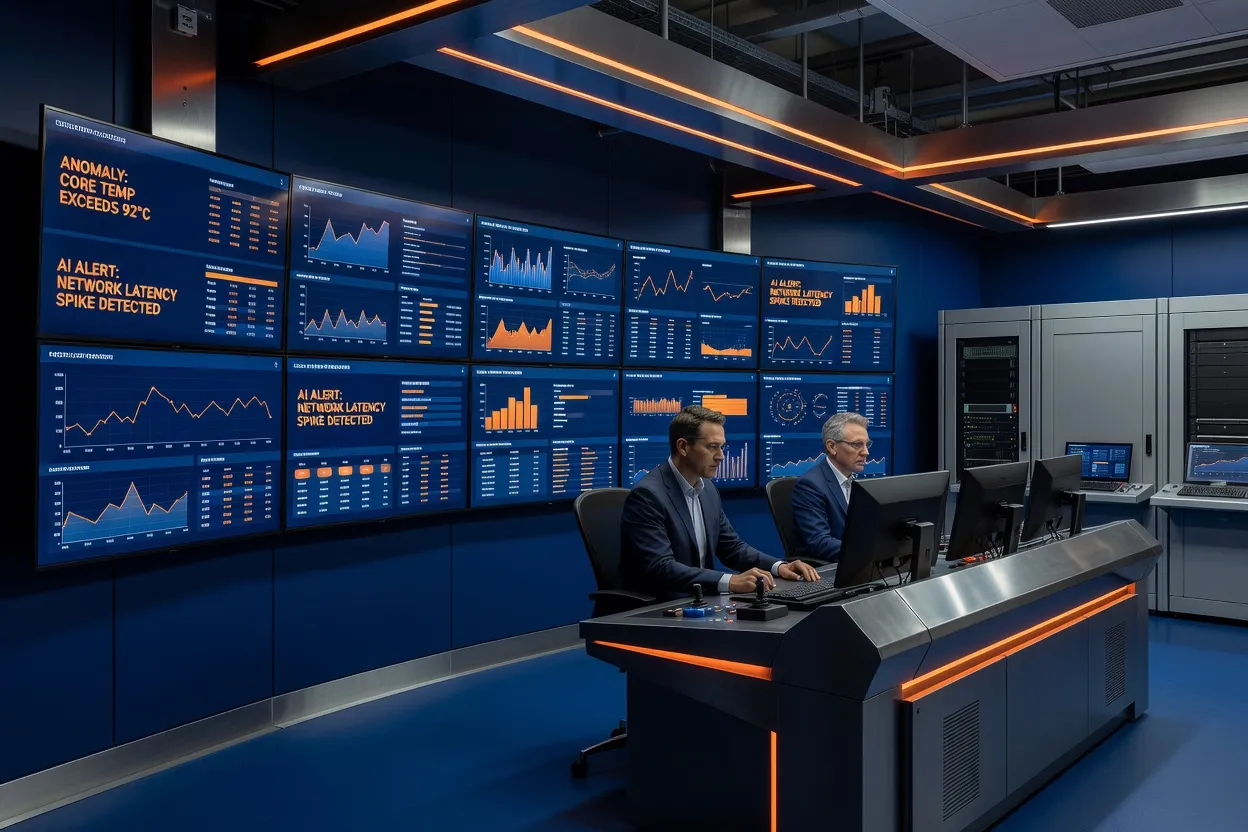
Significantly. Before MAS, our Reliability Engineers (REs) were basically high-level clerks. They spent 70% of their time pulling data into spreadsheets, trying to create Pareto charts that were already out of date by the time they were finished. They were looking in the rearview mirror constantly. Now, with Maximo Health and Predict, the data is visualized in real-time. Instead of “data gathering,” they are now “data analyzing.” Their daily routine shifted from “Why did this break?” to “What is the model telling us about next month’s risk?”
Six Months In: Real Numbers on Downtime and Savings
Now that you’ve been live for a significant amount of time, what do the KPIs look like? Is the ROI as clear as you hoped?
The numbers are better than I expected, but you have to look at the right metrics. We didn’t just save money on parts; we saved “unplanned minutes,” which are the most expensive minutes in the plant because they ripple through the entire supply chain. When a line goes down unexpectedly, it’s not just the lost production; it’s the idle labor, the missed shipping windows, and the potential for customer penalties.
| Metric | Before Pilot (Avg. Monthly) | After 6 Months (Avg. Monthly) | % Improvement |
|---|---|---|---|
| Unplanned Downtime (Hours) | 42 | 11 | 73.8% |
| Emergency Work Orders | 85 | 18 | 78.8% |
| Mean Time Between Failures (MTBF) | 145 Hours | 410 Hours | 182.7% |
| Maintenance Cost per Unit | $4.12 | $3.28 | 20.4% |
| Spare Parts Inventory Carrying Cost | $1.2M | $850K | 29.2% |
The most surprising number was the spare parts inventory. Because we can now predict when a component will fail with a high degree of confidence, we no longer need to keep “just in case” stock for every possible scenario. We’ve moved to a “just in time” model for expensive items like large servos and specialized gearboxes. We know we have a 14-day lead time on a specific motor, and if the AI gives us a 21-day warning, we don’t need to keep that $15,000 motor sitting on a shelf gathering dust for three years. That’s capital we can deploy elsewhere.
Scaling Beyond the Pilot Plant
You started with a specific set of assets. How are you moving this across the rest of the facility, and eventually, the rest of the enterprise?
Scaling is about templating. We spent the first 12 months perfecting the models for a standard 50HP motor and a standard hydraulic circuit. Now, we can “copy-paste” those models across 200 other assets in the plant with about 80% accuracy on day one. We are using the Asset Groups feature in MAS to push these predictive models out globally.
We are also looking at how this changes our capital expenditure (CapEx) planning. Instead of replacing machines because they are “ten years old” according to some arbitrary accounting schedule, we are using Maximo Health scores to identify which machines are actually reaching the end of their lives and which ones can go another five years with minimal intervention. This is a huge shift for our corporate leadership. They are looking at the data from our pilot and realizing they can defer millions in CapEx by being smarter about maintenance. I actually recommended our regional VP read that expert interview on AI in maintenance because it explains how this scales from a single plant to a global fleet of 15 facilities.
Advice for Plant Managers Starting Their Own Rollout
For a plant manager who is currently where you were 18 months ago — stuck in reactive mode but wanting to change — what are the first steps they should take?
Don’t buy sensors first. Buy into the process. You need to be brutally honest about the state of your data. If your Maximo environment is a mess — if your asset registry is incomplete or your failure codes are non-existent — AI will just help you make mistakes faster and at a larger scale. Start by cleaning your asset registry, revisiting your reporting and KPI dashboard setup so leadership can actually see the baseline, and getting your technicians used to mobile devices. If they aren’t comfortable using a tablet for a basic work order, they won’t use it for a complex AI alert. For plants still running a mix of connected and offline sensor gateways, the field-hardening approach described in general industrial systems administration references is worth a look before the pilot expands past a single line.
I kept a list in my notebook of the signs that a plant is ready for this. If you can’t check these boxes, you aren’t ready for AI yet:
- High-quality historical data: At least 24 months of clean work order history in Maximo. The AI needs a “textbook” of past failures to learn from.
- Stable infrastructure: Robust Wi-Fi or 5G coverage in the “dark corners” of the plant where the critical assets live. You can’t have dead zones if you want real-time monitoring.
- Standardized failure codes: A team that actually uses the failure codes correctly every single time. No more “General Repair.”
- Executive patience: A leadership team that understands the ROI is measured in months and years, not weeks. You have to “train” the models, and that takes time.
- A data champion: Someone on the maintenance team who loves spreadsheets as much as they love wrenches. You need a bridge between the mechanical and the digital.
And what about the common pitfalls? What should they avoid?
I’ve seen colleagues in other companies fail because they made these five mistakes:
- Treating AI as a “black box”: Not explaining to the techs how the model works. If they don’t understand the “why,” they won’t follow the “what.”
- Over-instrumenting: Putting sensors on everything, including the office coffee machine. Focus on what moves the needle on OEE and safety.
- Ignoring change management: Forgetting that maintenance is a human endeavor. If the techs don’t trust the tool, they will find ways to bypass it or ignore it.
- Dirty data migration: Trying to move 20 years of “bad” data into a new MAS environment without scrubbing it first. You’re just moving your problems to a more expensive platform.
- Lack of feedback loops: Not updating the AI models when they get something wrong. The system only gets smarter if you tell it when it’s wrong. You have to close the loop on every false positive.
It’s a long road, and it requires a lot of cultural heavy lifting, but 18 months later, I can tell you: I sleep much better at night. The “hero culture” is dead at our plant, and honestly, we’re all better off for it. We’re no longer fighting fires; we’re preventing them. That is the real power of Maximo AI — it gives you back control of your time.